

In this guide
In short
- Roughly 5 minutes after 25 of work, 10 to 15 after an hour.
- Good breaks are different from studying and have a clear end.
- Set the break timer before you open a game, not after.
Why bother
Attention fades. You know the feeling. You've read the same paragraph three times and nothing's gone in.
Short breaks get you back with a clearer head, and they make a long revision day bearable. Knowing a break is coming in fifteen minutes also makes a hard section easier to push through.
How long
The exact numbers matter less than being consistent and actually ending the break. If you already use Pomodoro, this is built in.
- After 25 minutes: 5 minutes.
- After 45 to 60 minutes: 10 to 15 minutes.
- Every couple of hours: 20 to 30, ideally with food and a bit of movement.
- On a full revision day: a real meal break.
What actually rests you
Do something that isn't studying. If you've been staring at a screen, look at something far away. If you've been sitting, move.
- Stretch or walk round the room.
- Grab water or a snack.
- Step outside for a bit of daylight.
- Talk to someone in person.
- Tidy your desk for the next block.
What to avoid
Anything with no natural end. Feeds and autoplay are built to keep you watching. You plan five minutes and look up forty minutes later, tired and not exactly keen to go back.
Also skip stuff that winds you up, like an argument in the group chat. Save the TV episode for when you're done.
Quick games, done right
A short puzzle or reflex game can be a great reset after an hour of reading. The catch is that games are designed to make you want one more round. Treat it like a snack, not a meal.
- Set the break timer before you open the game.
- Pick something with short rounds, not endless levels.
- When the timer goes, finish the round you're on and stop.
- If five minutes keeps becoming twenty, go screen-free for a while. No shame in that.
Using the Focus Timer
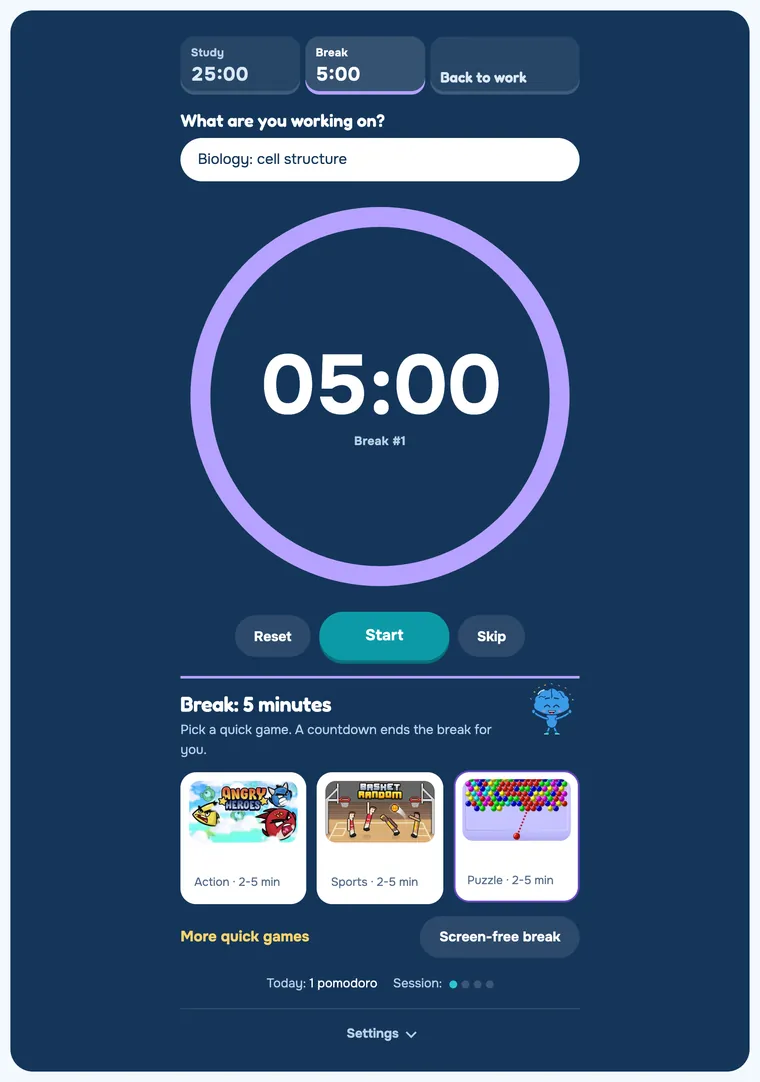
Start a focus block. When it ends, start a 5-minute break straight away so the break has an end too, and when that rings, start the next block before you have time to drift. Timing breaks isn't about being strict with yourself. It just means you're not relying on willpower at the exact moment it's weakest.
Quick questions
Is 5 minutes long enough?
For a 25-minute block, yes. After longer stretches, take 15 to 30.
Should I check my phone on a break?
Better not in short breaks, because feeds rarely end on time. Reply to messages with a timer running, or save it for a longer break.


